Showing posts with label Sissinghurst. Show all posts

Thursday, 29 December 2016

The Winter Garden - Part 1


To any of you who havent stumbled on me before let me take a moment to say Hi & welcome!
I asked Twitter what they would like me to blog about & gave 3 options, this was the one that quite frankly came out streets ahead, which of course is the one I was most dreading writing.
This may sound odd coming from me but the concept of a garden totally skewed towards the winter months was something that until recently hadn't really come up in my radar. Why? I'm not quite sure?
In most of our gardens it would be nigh on impossible to dedicate an entire garden or even section of garden to just plants that look or smell good in the winter. Most urban gardens just don't have the scale needed for this but what we can do if we want to incorporate this into our lives is perhaps take one or two of the choicest plants and use those.
A common misconception with gardens in winter is everything stops, nothing grows, nothing changes and nothing flowers. This simply isn't true. Winter can be an amazing time to be out in the garden and if planned correctly can be full of scent, colour and flowers from December through to the end of February when Spring creeps up on quiet feet.

On a personal level the first time winter gardens came to my attention was whilst working at Sissinghurst. The National Trust introduced its 365 policy (meaning that they wished to open properties for 365 days a year) Many gardens, including Sissinghurst werent geared up to being viewed all year round and there was talk of introducing a whole new section of garden designed specifically to be viewed in the winter. This was a bit of a contentious issue for gardens that are essentially historic in their approach. Obviously the planting styles of the original garden couldn't possibly be overturned, ideas of converting outlying field areas into new gardens were discussed. Whether or not this is happening or whether it will ever happen im not sure but it did raise the idea of a garden completely designed to be viewed in the deepest depths of winter.

I had originally thought to cover this subject in just one post, it soon became obvious that such a large subject deserved more so below I outline some of the aspirational plants for winter in the form of shrubs & trees

Shrubs
Chimonanthus praecox
dsc_0253
This is one of my most loved plants for scent, so rarely seen (or noticed) for the most part of the year. My first encounter, that I remember, with this plant was at Hole Park. This unassuming shrub id hardly looked at, hidden up in the woodland amongst a million other shrubs, suddenly leapt out at me with the most gorgeous scent ive ever come across from about 20 foot away! To me it smells exactly like Banana Milkshake, specifically Yazoo Banana Milkshake. I could literally sniff it for hours!
They had 2 at Hole Park, the one in the woodland (which seemed to have more scent?) the other in the Millenium Garden which we found a very old label on whilst pruning it saying "Chimonanthus fragrans". Quite possibly this label had been there since the the shrub had been planted, maybe as far back as the 20's when the gardens were laid out, although most likely closer to the 60's judging by its size. There are now only Chimonanthus praecox, all the rest of the names inc. C. praecox var. Grandiflora are now synonyms. Regardless a rose by any other name etc.
dsc_0228
Pretty much bombproof as far as plants go it will take even the hardest of winters and keep flowering. As a native of China its well used to roughing it out amongst the snows despite its delicate appearance. So far as I can ascertain it was first recorded in 1822, like most plants from China around that time planthunters risked life and limb literally to bring them back.
If youd like to know more about the planthunters of this time and region I did come across this lovely article Financial Times - Plant hunting in China This is exactly the sort of thing that excites me immensly! I dream of one day following in the footsteps of these giants... Anyway! back to winter plants!
dsc_0229


Cornus

A firm favourite with gardeners, nurseries and designers alike, especially C. sanguinea 'Midwinter fire'. Now don't get me wrong when i say this as I do appreciate why its become so popular but I am getting a bit bored of seeing it. Especially when there are SO many other good Cornus out there!
Just from the C. sanguinea alone there are so many to choose from!
dsc_0056
Cornus sanguinea 'Magic flame'
Magic flame, Winter flame, Winter beauty... im sure theres more?

That said 'Midwinter fire' does have its merits especially when used alongside other impressive varieties. Cornus alba sibirica has several varieties worthy of garden space as does Cornus sericea. Why not mix them up?
dsc_0071
Cornus sanguinea 'Midwinter fire' (Left) with Cornus alba sibirica 'Ruby'
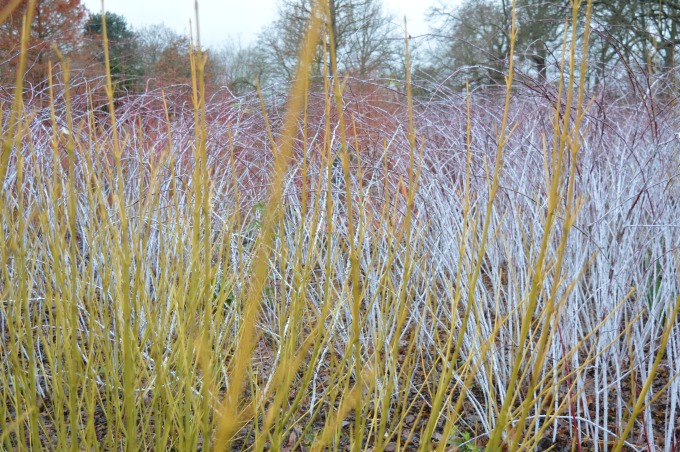
One thing to remember with Cornus is the intense colour is held on the newest growth, to continue to enjoy this you can either prune a 3rd out each spring or every 3rd spring cut down to 2 buds all over.
dsc_0075
Cornus sericea 'Buds yellow' in foreground with Rubus biflorus in background


Daphne

A highly under rated plant, in my humble opinion, the Daphne has scent and colour in the form of beautiful delicate flowers. I rarely see them and my parents attempted to grow one years ago in a pot but it eventually succumbed and went to the great compost heap in the sky!
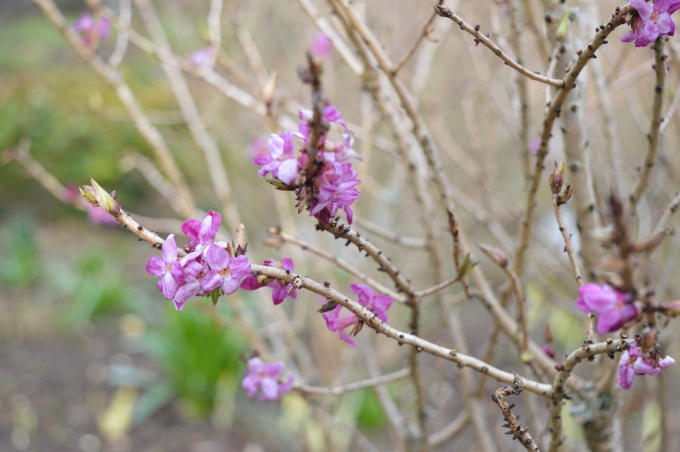
dsc_0551
A lot of Daphne's are evergreen but Daphne mezereum holds its flowers on bare branches, flowering on 2nd year wood and slow-growing very little in the way of pruning needs to be done. Maybe that's for the best as it can cause quite a severe skin reaction, hence its common name of Spurge laurel. It's certainly one you would teach your children to approach with caution but then shouldnt they be taught from an early age that every plant in a garden be given respect?
dsc_0091
Daphne bohlua 'Hazel Edwards'
Another good one for winter colour and scent is Daphne bholua (Nepalese paper plant) normally found at high altitudes, where it is deciduous, grown in our gardens it tends to stay evergreen. It can be a slightly tricky plant to grow, often grafted on a rootstock they can sadly suffer from catastrophic root collapse very suddenly. This i believe is what happened to my parents plant, that, combined with a lack of moisture in the summer.
One other Daphne that bears mentioning, which sadly I don't actually have a picture of is Daphne odora, as the name suggests is highly scented. A native of China this time, a short-lived evergreen shrub. Like all Daphnes can be toxic, so be cautious when pruning. It produces the typical pale pink tubular flowers which can be smelt often before they're seen.


Salix
The common willow is often overlooked when thinking of winter colour but its young stems are equal to Cornus and incredibly useful in waterlogged, boggy soils or on the edge of ponds.
Coppiced regularly Salix alba in particular offers a great variety of colour. Vitellina ‘Yelverton’ gives shoots with a beautiful warm reddy orange glow to rival Cornus 'Midwinter fire'. Whilst S. alba ‘Chermesina’has a slightly more pronounced orange glow to it and  S. alba ‘Britzensis’ has bright scarlet shoots. Another one worth including on this list is  S. daphnoides with the added bonus, for me, that it can be prone to fasciation where its plummy coloured stems become flattened & distorted. Having clambered over a stooled trunk to remove the older shoots about 3 ft out from the edge, trying desperately not to slip and fall into the icy water of the egg pond at Hole Park this holds particularly fond memories for me.
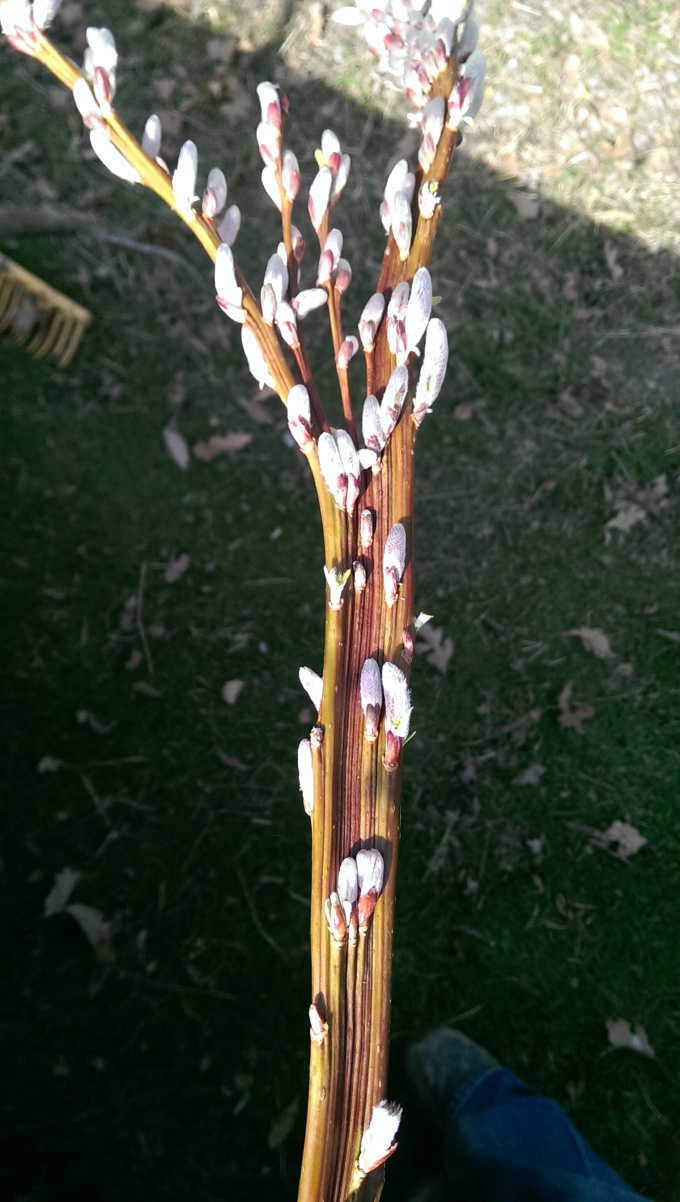
imag2987
The fasciated stem of Salix daphnoides
dsc_0064
Salix alba var. Vitellina 'yelverton'
Lonicera
When we hear the name Lonicera we will often automatically think of the Honeysuckle vine that clambers through our woodlands but another Chinese import, this time by Robert Fortune the Scottish planthunter, in 1845 changed the face of our winter gardens. Lonicera fragrantissima, whose most outlandish common name is "Kiss me at the gate" or more commonly "Winter honeysuckle" is a rather unremarkable shrub throughout the other months but come December its gentle, delicately lemony perfume lingers on a still day.
There are several names which are no longer accepted and are only synonyms now, an odd one to this which at present is still classified as unresolved is Lonicera × purpusii.
This was first classified back in 1923 as a cross between L. fragrantissima and L. stadishii ssp. standishii. Given that L. standishii is now a synonym of L. fragrantissima i admit im a little confused by its current unresolved status. All i can think is that at present no one has got around to changing this officially but that it will just end up as a variant like the others.
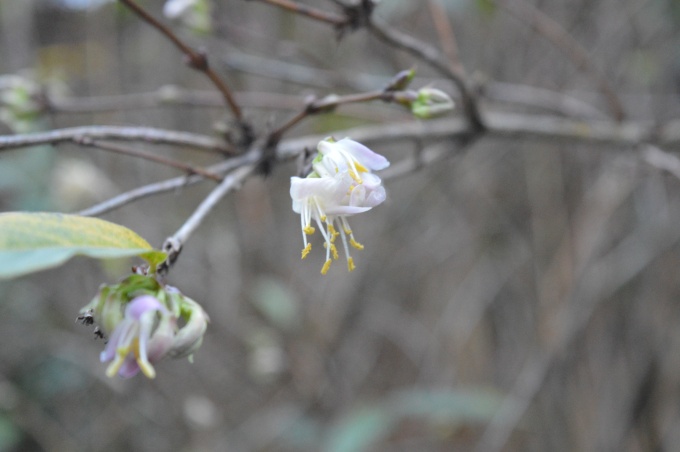
dsc_0206
Lonicera standishii 'Bhudapest' at Wisley is now a synonym Lonicera fragrantissima

Mahonia
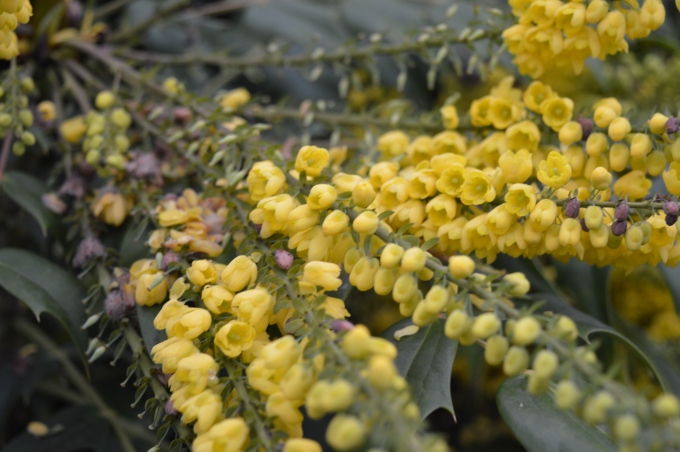
dsc_0088
Flowers of Mahonia aquifolium
For those of you that have encountered me before my lack of love for yellow flowers will be no surprise BUT for Mahonia's I reserve my right as a lady to change my mind. These acid yellow spikes of honey sweetness are actually a firm favourite even despite their spiky leaves!.... and their in your face yellowness!
Their scent drifts across the garden so strongly it can make you think if you close your eyes you are in fact standing in a garden in midsummer and for the occasional brave bee on a warm winters day an amazing source of nectar.
To make them even more attractive, to my eye, some of them colour up nicely when caught by a little frost and some even have a reddish tint to their new foliage.
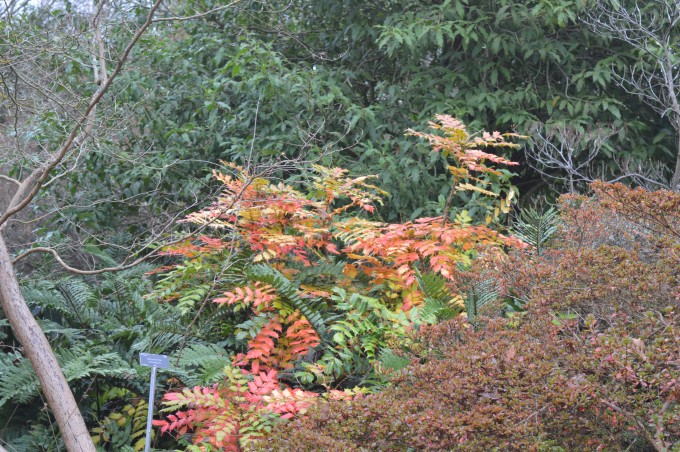
dsc_0019
I think this is Mahonia japonica but couldnt get close enough to read the label!
There is a slight problem though with Mahonias at the moment, they are currently part of the Berberidacea family, the same family that the Berberis gives its name to and under current reformations that are rocking the plant world due to DNA testing its looking likely that a lot of the plants we have become used to calling Mahonias will soon be reclassified. This is not a new thing though, take Mahonia aquifolium, one of the most well known of our Mahonias. While mooching around on the internet I came across this absolute gem of outrage! Written in 1956 as a "Letter to the Editor" it bemoans the fact that the original name of Berberis aquifolium has been pushed aside. Read it for yourself here... Letter to the Editor
If you're not sure that your Mahonia is still a Mahonia here's where you can check... The Plant List
This list is a constantly updated version of acceptable names and their synonyms in this harsh, fast moving world of plant name revisions!
That said, im sure no one will shoot you if you continue to call your Mahonia nevinii that and not Berberis nevinii.... except me, I might... maybe...
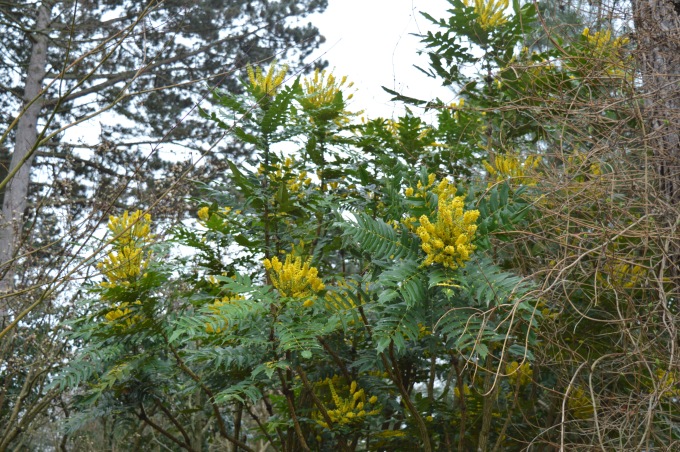
dsc_0028
Mahonia aquifolium
Sarcocca

imag3123
Sarcoccoca confusa is the best known of the Sarcoccoca family, often referred to as Sweet Box or Christmas Box, its thought to originate in western China. Not only can this beautiful evergreen shrub overwhelm you with its intense perfume it has an added bonus of holding its glossy deep purple black berries whilst flowering!
It's slightly shorter cousin S. hookeriana is just as attractive for scent in midwinter.


Viburnum
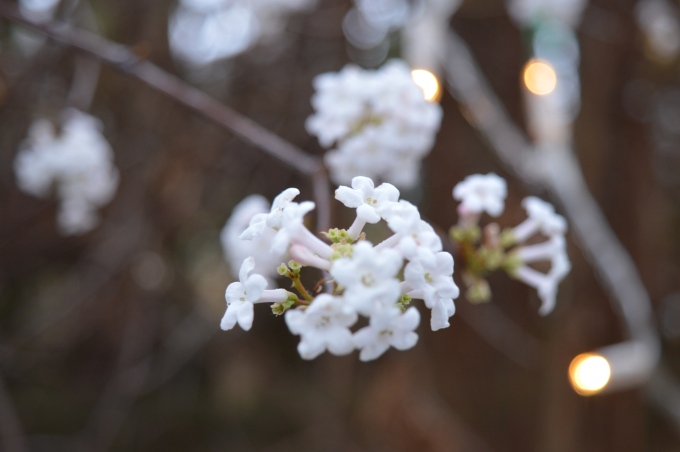
dsc_0009
Viburnum farreri syn V. fragrans. One of the parent plants of V. bodnatense
For scent and display its hard to beat a Viburnum in winter. A good rule of thumb with highly scented plants is their flowers will be less showy, after all, why waste energy developing a large flower when you've put so much effort into developing its scent? Viburnums get round this by clustering its small flowers tightly giving the impression of a much larger display.
Viburnum × bodnantense (V. farreri × V. grandiflorum) is a popular choice for gardens. Selected by, Bodnants then Head Gardener, Charles Puddle about 1935 it was in fact bred at Edinburgh Botanic Garden in 1933 *little known fact klaxon*
bodnatense 'Dawn' tends to be the most frequently encountered but there are others 'Charles Lamont' for example. I have to admit that on first appraisal there's not a huge difference between them though. I guess if you're are a real Viburnum fanatic though you will easily spot which one is which.... maybe... possibly...
img_20161217_101305
Viburnum bodnatense 'Dawn'
Rubus

The white stemmed bramble of which the most famous, perhaps, is cockburnianus... making horticultural students across the country giggle into their textbooks. That said it's a massive genus with around 700 species, not all suitable for the fix of winter colour we are looking for but 3 stand out above the others
Rubrus cockburnianus
Rubus thibetanus
Rubus biflorus
dsc_0077
Rubus biflorus
All have the waxy farinae on the stems that make them a good choice for winter
Rubus phoenicolasius- Japanese wineberry differs slightly from the others named as its stems are bright red and its one that I would be careful of siting in too small a garden as once established it can be a bit of a thug, worth it for the fruit though!


Trees
Betula pendula - silver birch
dsc_0233
Betula pendula against a midwinter sky at Anglesey Abbey
A regular on the list of people's favourites, beautiful at any time of year, they really stand out when placed against a dark background of a yew hedge or perhaps Prunus lusitanica.
A good tree for a medium-sized back garden in its natural habitat it would only be found at higher altitudes but is quite happy to put its roots down for us in suburbia. With trees like this it gives us great opportunity to underplant with some of the great ground cover plants ive already talked about but I like it underplanted with Ophiopogon planiscapus 'Nigrescens', often referred to as 'Black grass' it's actually a member of the Asparagaceae family. Mix that with Narcissi 'Rip van winkle' and it looks stunning!
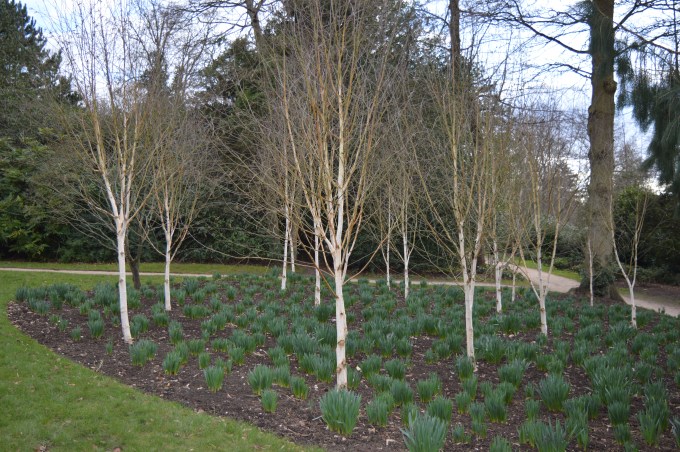
dsc_0542
Betula pendula at Cliveden
Betula albosinensis
dsc_0209
Betula albosinensis
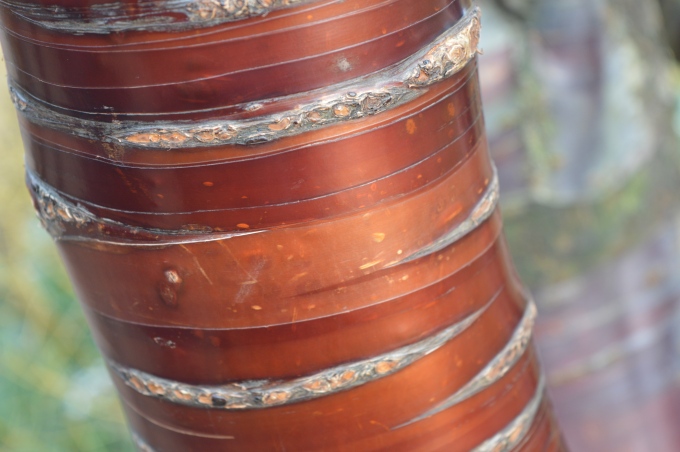
The chinese red birch tree comes into its own in winter, you could be mistaken for thinking its prunus serrula at first glance but the catkins which are often held onto as the leaves fall are the giveaway.
dsc_0092
Betula albosinensis
It has an incredibly touchable bark that just begs you to peel off the loose layers revealing the shiny new red layers beneath. It benefits aesthetically from this as the freshly revealed layers are a bright shiny red, id be tempted to put this close to a place where people passing could do so.
There are several cultivars to choose from 'china rose', 'Kenneth Ashburner' are good for their colour  and in my opinion one of the most showy ones is 'Red Panda'.
 
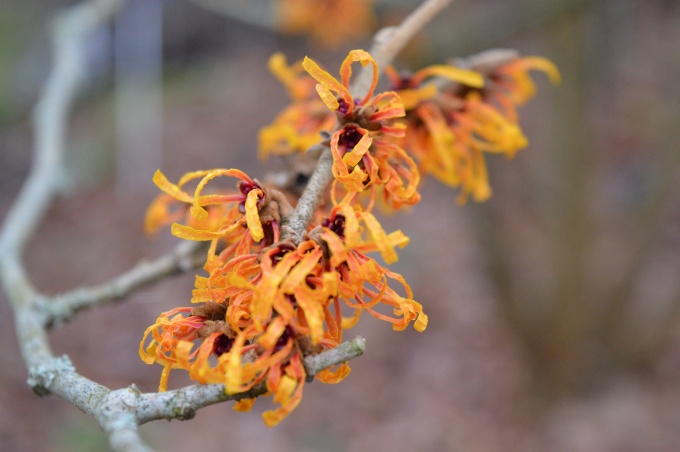
Hamamelis - Witch Hazel
dsc_0058
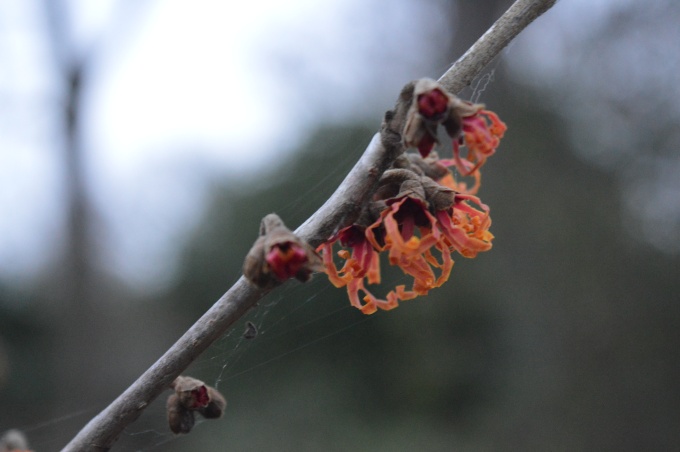
Hamamelis mollis
The humble witch hazel is always a worthy addition to any garden. The Genus consists of 6 plants
Hamamelis japonica
Hamamelis mexicana
Hamamelis mollis
Hamamelis ovalis
Hamamelis vernalis
Hamamelis virginiana
For our purposes though we will concentrate on Hamamelis mollis & Hamamelis ×intermedia (H. japonica × H. mollis) as they provide the showiest winter flowers. The Hamamelis Mollis was introduced by plant hunter Charles Maries, he sent it back to the Chelsea based nursery James Veitch & Sons of Chelsea, London in 1879. It took a further 23 years for its beauty to be noticed and for enough stock to be propagated for it to go on general sale in 1902.
Hamamelis ×intermedia first came into existence  at the Arboretum Kalmthout a Belgium Botanical garden. Originally a tree plantation for Charles van Geert in 1857 it is now owned by Antwerp province and is open to the public.
Jelena and Robert de Belder selected cultivars that were being bred for red flowers from the hybrids. Jelena, Diane & Livia were the first introductions. Now the list and variety is almost endless!
If you want to see them in all their amazing glory there is a Nursery based in Kent Witch hazel Nursery which has open days (2017 - Sunday 22nd January 2017. 10am to 4pm
Sunday 5th February 2017. 10am to 4pm ) where you can see around 125 cultivars!
dsc_0098
Hamamelis 'Orange peel'
dsc_0212
Hamaelis 'Jelena'
If you're looking for something that little bit different though you'll have to look a bit further afield! I asked one of the finest rare plantsmen I know for his favourite "Winter" plant knowing that the reply wouldnt be a run of the mill answer. He didn't disappoint
 
Ben Probert - @BensBotanics
http://www.bensbotanics.co.uk/
The plant that really excites me is a bit of an odd one (of course!); Symplocarpus foetidus. It's not a plant that will ever set the world alight but I like it because there's a bizarre and wonderful architecture to its giant 'snail shell' spathe, although stuck at ground level its spathe is I think a nice colour, and it has the interesting element of 'thermogenesis' to keep itself warm in the bitter winters of its homeland. I lost several generations of it before I learnt the secret of getting it to survive winters here, and it flowered last year for me
Winter flowers tend to be all a bit samey- little dainty flowers with a dainty scent. It's nice that there's something 'pug ugly' around too!
It is a bit of a sod to grow; it grows in boggy ground that freezes hard in winter, so in cultivation it needs lots of water in summer and then a drier winter- easier said than done. With a root system potentially 1m+ long it's a bit of a bugger in a pot too!
Im not sure that "pug ugly" is a fair description, its actually quite pretty...
Symplocarpus foetidus
 
In part 2 of the Winter Garden I will be looking at Groundcover, climbing plants, grasses and seedheads. I'll be looking at permanent structure within a garden, this can make all the difference when planning out your garden.  Also which gardens in the UK are amazing to visit for inspiration on a cold winters day. So make sure you follow to get an alert when its published!


Wednesday, 7 September 2016

The Orchard revisited (Repost from 2013)


Originally posted on our Landshare Blog and several other places, heres a look at the Orchard Amy and myself planted way back when! I was SO proud of everyones efforts and all the years of preparation that brought us to this point, I still am and im sure the Orchard is now producing twice this amount 3 years on....

Bumper Apple Harvest

This September we had the biggest harvest of Apples from our new Orchard to date. The Apples & other fruit trees have been planted over the course of 3 years, the last trees being planted in the spring of 2012.
They grow on a very testing site, exposed to the wind and on heavy clay soil. The fruit trees have had a tough start, but a little bit of tender care and the damp summer of 2012 meant they got their roots in properly, and are now starting to perform as they should. Undeniably it’s been a good year for fruit all round, even our small Vegetable garden Orchard has produced fruit and these trees were only planted in the spring of this year.
One of our volunteers has taken on responsibility for the large Orchard almost entirely and over the course of winter 2012 – 2013 he would come down to see me and tell me about how the pruning was coming along, retie any trees that had come loose, repair rabbit guards etc.

Apple blossom in spring

In the spring he mowed, keeping the grass low improved the air circulation around the trees and took out competition for moisture and nutrients. The spring show of blossom, although later than normal was incredible. There is nothing more beautiful than standing surrounded by fruit trees in full flower. The scent on a still day can make your mouth water!
Finally in mid August, our volunteer, Peter started coming back from the Orchard laden with boxes of Apples. At first it was a trickle, then a veritable flood of Apples. Once the kitchen had their fill and they had made Apple pie, Apple crumble, Apple juice and of course offering up our Apples au natural, we started to offer them for sale in our shop …. And still the Apples kept coming! It was beginning to feel a bit like a scene from the Magicians Nephew with crates of Apples stacked waist high and Peter warning me there was more to come, much more.
apple harvest 2013
Some of the young trees laden with fruit.

At this point we had to get inventive as we had way more fruit than we could ever deal with so we contacted a local business, Biddenden Vineyards and consulted with a lovely chap called Julien, who offered us the solution of juicing our Apples. So a date was set for collection and a collaboration of the Rangers team and the Veg garden saw a bright Thursday morning in late September, and an army of Volunteers set off for the orchard with our hastily assembled Apple crates. Less than 2 hours later with big smiles the Orchard had been virtually picked clean.
apples sept 2013
A happy team of volunteers

We had estimated having about ½ a ton, we had underestimated, on final weight we had just under a ton of fabulous Apples. These were sent off for pressing and within 3 days we had our very own bottles of Apple juice. This means we can carry on enjoying the fruits of our labour, if you’ll excuse the pun, right into next year. Well, I say that, that’s if there’s any left as we’re selling it in our shop, and by all reports it flying out the door!
apple juice 2013
Me, and a lot of fruit juice!

Finally a quick note about the storm the other night, there were some casualties, relatively minor ones compared to how bad things could have been. A few small trees have gone down in the garden and wider estate, causing very little collateral damage. The worst thing to happen to the Vegetable garden was that we lost both sets of the south ends of the polytunnel doors, the wind had, despite our best efforts, ripped the locks off the doors, snapped the reams of baling twine we had wrapped around the handles for extra security, pulled the anchor points clean out of the ground and then proceed to thrash the doors back and forth till they cried mercy. Thankfully it appears that’s the worst it did and it shouldn’t take too long to replace them with something bigger, better and more resilient.

Lou – Senior Vegetable Gardener

Saturday, 16 July 2016

Organic Veg the No-Dig way (repost from 2013)

Originally written for the Landshare Blog way back in 2013, this was subsequently reposted in several locations and the information included went on to make up part of the talks I give to groups about growing vegetables Organically and using the No-Dig method. I thought you all may like to see what we did there.
Apologies for the quality of the pics!

Our no-dig veg garden 6 months in...

An unusual year
IMAG1285
So, halfway through the year, ok a little over but close and how is our No Dig system progressing? Some of you who visited us in previous years will hopefully be pleasantly surprised at how we’ve changed. We started converting our field over to 4ft wide beds at the end of last year and putting in place a system of composting and mulching them. This is how things looked in 2012…
The beds being converted over…
IMAG1424
and in 2013…
veg garden no dig - Copy
Our team spent a lot of time getting the beds converted, and there is still more work to do, but so far we really are seeing the benefits. Working in this method allows you to grow veg in a more consistent and easier to manage way. There are some crops that at present we are not attempting, such as potatoes, carrots and parsnips. We will grow these again in the future once we have built up a decent soil depth but we are having some enormous successes with other crops such as Kohl rabi, Onions and Leeks.
DSC_0254 - Copy
Kohl rabi ‘Azur Star’
DSC_0268 - Copy
Onion ‘Bedforshire Champion’
DSC_0270 - Copy
Leek ‘Northern Lights’
polytunnel
We also converted our tunnels over to the No Dig system last year, the soil had become exceedingly depleted and had no structure to it at all. We had started to find that even our Tomatoes were struggling to produce decent vines, so copious amounts of manure were added. Its worth bearing in mind when trying this yourself, that not all crops love a high Nitrogen soil and that it can sometimes cause a chemical imbalance, locking up certain nutrients like Magnesium. In a covered environment this can be easily dealt with but when growing organically its best to avoid overfeeding plants in the first place. We planned our crop rotation very carefully to avoid problems and we are getting great results despite the cold start to the year. Below is a picture taken in late July 2011 showing how stressed our Tomatoes were.

and now….
DSC_0212 - Copy
We are proud to be harvesting from them already and the difference in growth is phenomenal!
We also are providing our onsite restaurant with delicious organically grown Cucumbers, and this year we are growing 4 different types. In the cutest cucumber contest its a close run race between Iznik F1 and Passander F1, producing a perfect Cucumber for your lunch box! Or for something a little more substantial you might want to try Louisa F1 or Camilla F1.
DSC_0231 - Copy
‘Iznik F1’
DSC_0221 - Copy
‘Louisa F1’
DSC_0234 - Copy
We have been having an enormously abundant year for fruit as well. In late April I despaired that the weather would improve and by late May I had almost given up, but it hasn’t done our fruit any harm whatsoever. We have produced over 30 kilos of Gooseberries alone, all to be cooked up into yummy desserts by our Restaurant. Not to mention all the Strawberries, Redcurrants, Blackcurrants and soon to be available from our Farmers Market stall, Raspberries! Below is a picture of our Loganberries and in the distance the North Downs.
One thing gardeners may want to keep an eye out for at this time of year is Gooseberry Sawfly. Able to decimate your plants in a day, they don’t just eat your Gooseberries they will go for your Red & White currants too! Organically you have very few options open to you as they must be dealt with quickly. The best and easiest option is to lay a old sheet under your bush and shake/flick the leaves till the horrible little blighters fall to the ground. When you think you’ve cleared one area move the sheet to the next and repeat process. Here’s the grim bit, once your plants are clean of the larvae and your sheet is covered in them you can then deal with the pest in an appropriate manner. How you choose to do this is up to you, but I suggest you don’t release them back to freedom. I would normally expect them a tad earlier in the year but it appears our unseasonable weather has knocked them out of kilter too.
I could include a Thousand more beautiful pictures of our lovely Veg. Garden as each one tells its own story but I run the risk of revealing my inner Nerd. Why not come and join us instead? See for yourself this unique venture into vegetable gardening and admire the best view in Kent …. well unless you climb to the top of the Tower that is.
Louise – Senior Vegetable Gardener

Disclaimer: Things will have changed a lot since this was written, so if you visit now do not expect to see things described above. Fruit varieties & placement may have changed as i believe bed layouts have also.

Sunday, 31 January 2016

Primula auricula - The beauty and the obsession

The theatre at Harlow Carr

 I'm not sure of the exact moment it happened, it kind of crept up on me when i wasn't looking. One day i was just looking at pictures of them, the next i was thinking about which one id like. How could i choose just one? They're not meant to be grown in ones or twos, they beg to be grown 20 or 30 different varieties! They ask politely to be installed in dainty terracotta pots with horticultural grit spread lovingly around their base. They beseech you to place them in a black backed "theatre" so you can admire them at their best. To have black labels with the neatest white written script naming them so you can think of them as little plant people.... oh.... wait....i may have gone a bit far?
Nope! That's perfectly acceptable, if you're a bit obsessional about auriculas.

In my previous blog i touched on these beauties, gave you just one pic to tease you, truth be told i could wax lyrical about these little iced gems of the plant world for hours!
So now i shall!
Are you sitting comfortably?
Then I'll begin....

On Friday i spoke to one of the Sissinghurst Gardeners, Josh '@joshsparkes01' on Twitter, he asked if id be joining them for Great Dixters upcoming  spring plant fair 2016, we met up last year which was truly lovely as i hadn't seen most of them since the previous July and i got to see Lex, my old HG, & Jackie too who were helping out on the the walled nursery stall.
Both Helen '@aboutagarden' and I have a bit of a thing for auriculas (is it possible to have a BIT of a thing for them? ) and spent quite some time drooling along with Josh.
Some of the nurseries i bought from

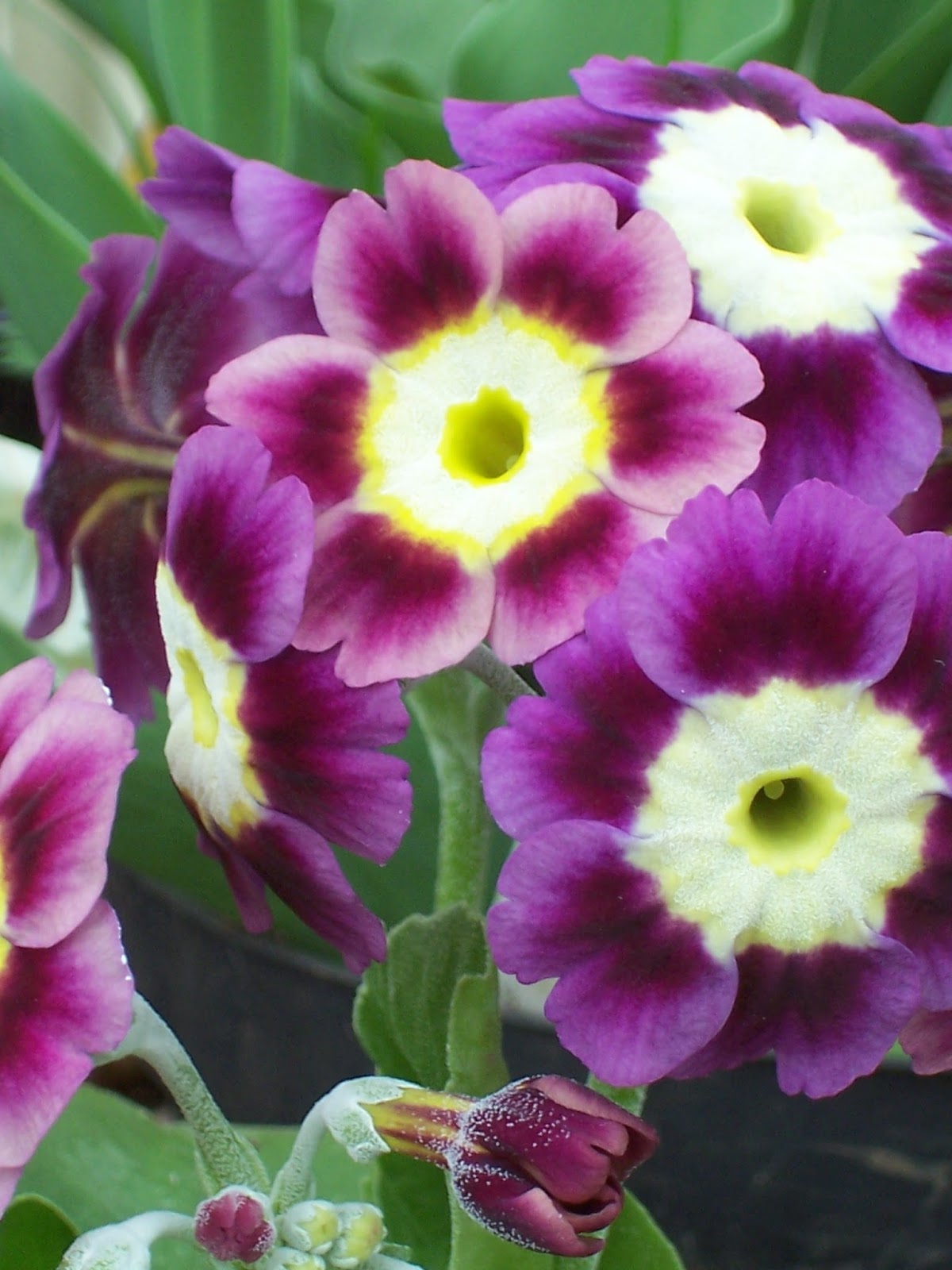
This passing comment awakened my thoughts on how i love them and what drives that desire, i cant tell you when it started but i can tell you who my very first love was, she is gorgeous and i love her still. Delicate, she wears her petals full and frilly with just the very finest of dusting around her head and leaves. May i introduce you to 'Miss Sibsey' (as she was sold to me way back in i think 2005/6). Having just rechecked i see she is now going under the name of  just 'Sibsey' but i love her just the same.

'Sibsey' my first love
I'm not even sure which nursery she came from, or which fair anymore but the obsession became full blown when in 2007 i started working at Ryton Organic Gardens and was given the Vegetable Kingdom, as it was known then, to look after. I have never before or since been such complete autonomy in a garden, i planned what was grown where and when, i was given total free rein to look after my section exactly as i saw fit and i loved it! I'll talk more about Ryton at a later date but i suffice to say i made lifelong friends there. People i adore! I learnt SO much! From the time i joined them in 2005 as a contractor to grow the plants for Chelsea and help with the 'Set up', then assisting in the gardens after, to the point where i left them in 2010 to spread my wings, every day, literally every day, i learnt something new!
I digress!
In my section the VK i was lucky enough to have a fabulous Alitex glasshouse, such luxury! It had Coldframes, Thermal shading, lighting, venting on the roof and on the sides, its own rain collection system and if that ever ran low mains water, beds to grow in and my pride and joy a show bench. I loved it!
I would spend ages choosing plants and bulbs to create displays throughout the year and as we were on a tight budget most would be grown from seed. Every night when i got home from work in the winter i would pore over seed & bulb catalogues, working out colour schemes and flowering times.

My show bench dispay

Me, faffing over my display in the Alitex

 I guess that was when my obsession became full blown as from March through April a huge amount of the display went over to auriculas. Some i inherited, some i brought with me but the most exciting one (to me) where the ones i grew from seed! When they got close to flowering i would check them every day! You never knew exactly what you were going to get!


 Now none of the ones i grew were technically show stoppers but there were some real beauties in there and it did mean i was completely hooked... oh I've just remembered my second named variety! Kevin Keegan! Ive got the football on in the background as i write this. Sadly Kevin succumbed to the dreaded vine weevil, my bad, sorry Kevin.

A very rushed visit to Chelsea in 2010 where i did the marquee in half an hr, i know right! Half an hr! allowed me time to take only one pic. This is what happens when you go to plant shows with people who see plants as secondary to a garden though....

In 2010 one of the last gardens i visited with my mum and dad was Harlow Carr, life had been a bit turbulent as mum had been ill but was at the time in remission.
 They had a fabulous little auricula theatre with these gems below, mum wasn't a big lover of them, she liked "proper flowers" but she did make me laugh at her descriptions of them. She really didn't like the Fancy's, she thought they didn't look real. Good times.


 The next time i saw auriculas was in 2012, i went for a day out to Great Dixter with one of our seasonals, Catherine, shes awesome!


Anyway when i left Ryton i took 2 or 3 of my babies with me and through subsequent house moves they travelled with me, suffering neglect, till finally i had only one which i thought was a named variety but wasn't sure and 2 of the seedlings id grown but had never flowered, due to said neglect. 4 long years they waited for me to have the time to love them properly, I've never known a plant so faithful and resilient! In 2014 i repotted them all into the little terracotta pots id been dragging round with me, top dressed them and told them i was sorry and that i loved them and i hoped they forgave me... and they did. In the spring of 2015 i watched flower spikes form on my long neglected babies....


Then my excitement peaked! My first one opened and...


 It was 'Sibsey'! My beautiful, faithful, wonderful Sibsey had survived! The joy was indescribable.
Then the self sown ones....


 My passion reignited, i spent the spring of 2015 chasing auriculas....
and buying a couple too....

 Heres a few from the shows...
Great Dixter...


 And Chelsea...


 Have i got you interested?
There's so many different types of auriculas and you can only name them after they have won at a show, that's the rule. All the ones I've grown from seed wouldn't be considered up to show standard and the standards are very strict. There are several different types and the features are set out here types of auricula
But that doesn't mean you cant just enjoy their beauty anyway.
If you'd like to know more about auriculas you cant do better than get in contact with these guys The national auricula and primula society
They can put you in touch with showers and growers in your local area.
I really hope that you may fall in love with these little guys like i have.
Part 2 of this blog going more into the history and technical details will be coming soon....

Miss Sibsey and i will be getting married in spring 2017 and plan on honeymooning in the mountain ranges of central Europe where her family comes from....